

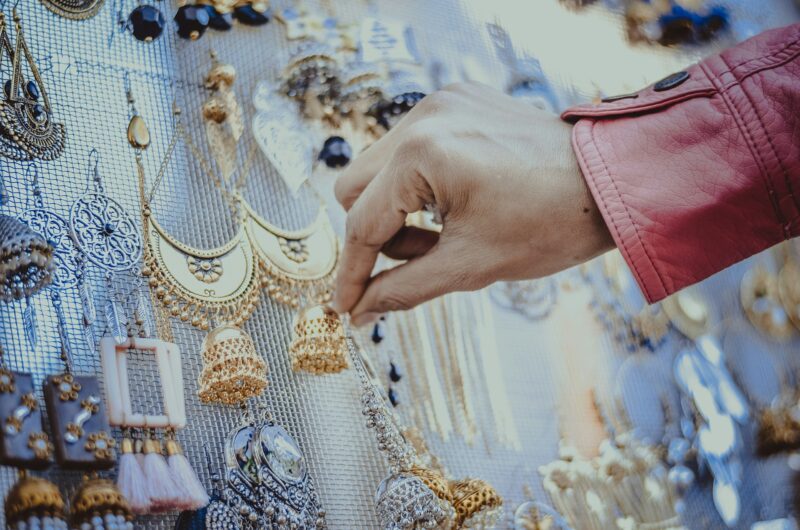
Uniformity is no longer the gold standard in personal styling. While the classic matched set of pearl studs or gold hoops will always hold a place in history, the modern jewelry landscape is defined by individuality and creative expression. The rigid rules of symmetry are being dismantled, replaced by a playful yet sophisticated approach to accessorizing.
This shift toward asymmetry allows for a more personalized aesthetic. It invites you to view your jewelry box not as a collection of rigid pairs, but as a palette of individual components waiting to be curated.
However, achieving that effortless “cool girl” look requires more than simply grabbing two random pieces in the dark. Successful asymmetry relies on balance, proportion, and thematic cohesion. Whether you have a single piercing in each lobe or a fully stacked ear, mastering the art of the mix can elevate your entire look.
Balancing Visual Weight and Scale
The most crucial element of mismatching is balance. When you forego symmetry, you must replace it with visual equilibrium. If one side of your face carries a heavy, ornate statement piece, leaving the other side bare or adorned with a microscopic stud can make the look feel accidental rather than intentional.
The Anchor Principle
Think of your look as a scale. If you wear a chandelier earring on the left, you need an “anchor” on the right to counterbalance that weight. This doesn’t mean the physical weight must be identical, but the visual impact should be comparable.
- Counterbalancing: Pair a long, linear drop earring with a cluster of studs or a thick huggie hoop on the opposite ear.
- Negative Space: Allow for negative space. A large, open geometric shape on one side can be balanced by a solid, smaller shape on the other.
Playing with Proportions
Manipulating scale is the easiest way to dip your toe into this trend. You might choose unique earrings that share a similar design language but differ in size. For instance, wearing a large pearl drop in one ear and a smaller pearl stud in the other creates a deliberate, high-fashion aesthetic that feels harmonious despite the difference in size.
Breaking the Monotone Metal Rule
For decades, fashion rules dictated that silver and gold should never meet. Fortunately, those restrictions have evaporated. Mixing metals is now a celebrated way to add depth and dimension to your fashion accessories.
The Bridge Piece
If you are nervous about clashing metals, utilize a “bridge piece.” This is a single item that contains both silver and gold (or rose gold).
- Two-tone Hoops: A hoop that twists both metals together acts as a neutralizer, allowing you to wear a gold stud in one piercing and a silver crawler in another without them fighting for attention.
- Gemstone Settings: Diamonds or clear crystals set in different metals can also unify the look, as the sparkle becomes the focal point rather than the metal color.
Texture and Finish
Beyond color, consider the finish of the metal. Mixing a high-polish gold with a matte or hammered silver can look jarring. To keep the look professional and cohesive, try to match the textures even if you are mixing the colors. A polished silver stud pairs beautifully with a polished gold cuff, maintaining a sleek, modern vibe.
Thematic Consistency and Storytelling
One of the most effective ways to mix and match jewelry is to choose a theme. This provides a narrative thread that ties disparate pieces together, ensuring your curation looks thoughtful.
Celestial and Nature Motifs
Nature provides endless inspiration for asymmetrical styling. You don’t need two identical stars to make a statement.
- Sun and Moon: A classic pairing that represents duality.
- Flora and Fauna: Try a flower stud on one side and a buzzing bee or a leaf trail on the other.
- Oceanic Elements: A shell on one lobe and a pearl on the other tells a seaside story without being repetitive.
Geometric Geometry
If your style is more architectural, stick to a shape family. You can mix circles, triangles, and squares as long as the lines are sharp and the aesthetic is modern. A long silver bar in the left ear complements a silver triangle stud in the right ear because they share a minimalist, angular DNA.
Mastering the “Ear Party” for Multiple Piercings
For those with multiple piercings—be it a double lobe, helix, tragus, or conch—the opportunities for curation multiply. The “Ear Party” is the industry term for a fully styled ear involving three or more piercings.
The Cascade Effect
A popular technique is the “cascade,” where the jewelry gets smaller as it moves up the ear.
- Lobe: Start with your largest or longest piece (a hoop or drop).
- Second/Third Lobe: Transition to smaller hoops or significant studs.
- Cartilage: Finish with tiny pave studs or delicate cuffs at the top of the ear.
The Scatter Method
Alternatively, the scatter method involves placing tiny, delicate studs randomly across different piercings to create a constellation effect. This works best with very small, unique earrings that sparkle, like tiny diamonds or gemstones, creating a texture rather than a focal point.
Incorporating Color with Gemstones
Color is a powerful tool for unification. If your earrings are different shapes, sizes, and metals, a shared color palette can bring them back into alignment.
Monochromatic Styling
Choose a single color—say, emerald green—and source different earrings that feature that stone. You could wear a raw emerald stud, a gold hoop with emerald charms, and a green enamel cuff. The eye registers the color green first, perceiving the set as a match even though the forms are entirely different.
Complementary Contrasts
For a bolder look, use the color wheel. Blue sapphires and orange citrines, or red rubies and green emeralds, create a vibrant contrast. When using contrasting colors, keep the metal color and setting style simple to avoid overwhelming the eye.
Occasion-Based Curation
While mismatched earrings are inherently playful, they can be adapted for various environments, from the boardroom to a black-tie gala.
Office Appropriate
In a professional setting, subtlety is key. Stick to:
- Mixed Studs: A diamond stud and a pearl stud.
- Subtle Asymmetry: A small hoop and a slightly larger hoop.
- Unified Metals: Stick to all gold or all silver to keep the look polished.
Evening and Events
This is where you can break all the rules. For a gala or night out:
- The Single Statement: Wear one massive, shoulder-grazing earring and leave the other ear bare or with a diamond stud.
- Mixed Eras: Combine a vintage clip-on with a modern, architectural cuff.
- Bold color: Utilize large, colorful gemstones to draw attention to the face.
To learn more about sourcing vintage pieces or understanding gemstone quality, consult with a reputable jeweler who can guide you toward high-quality individual pieces.
Refining Your Signature Aesthetic
The transition from matching sets to curated asymmetry is a journey of style evolution. It allows you to maximize the versatility of your collection, breathing new life into single earrings whose partners have been lost and inviting you to invest in standalone pieces that speak to you.
Start small. Experiment with swapping one stud for another, or wearing a hoop and a drop together. Pay attention to the balance of weight and the story the pieces tell together. Over time, you will develop an intuitive sense for the mix, creating a signature ear stack that is entirely, uniquely yours.